Uncategorized

  • Wow

    Did not see that one coming from Republicans.  Well, maybe from the point of how anti-spending they are.  I guess now that Bush will be out of office in a few months, GOP doesn't need to back him anymore.


    Bailout deal breaks down; Paulson back to Capitol

    By JENNIFER LOVEN and JULIE HIRSCHFELD DAVIS, Associated Press Writers 27 minutes ago

    A Republican rebellion stalled government efforts Thursday to avoid economic meltdown, a chaotic turnaround that disrupted the choreography of am extraordinary White House meeting meant to show joint resolve from the president, the political parties and the presidential candidates.

    After six days of intensive talks on the $700 billion financial industry bailout proposed by the Bush administration, with Wall Street tottering and presidential politics intruding six weeks before the election, there was more confusion than clarity.

    An apparent breakthrough was announced with fanfare at midday by key members of Congress from both parties — but not top leaders. Wall Street cautiously showed its pleasure, with the Dow Jones industrials closing 196 points higher.

    But the good news and the market close were followed by a rash of less-positive developments.

    Washington Mutual Inc. was seized by the Federal Deposit Insurance Corp. in the largest failure ever of a U.S. bank, after which JPMorgan Chase & Co. Inc. came to its rescue by buying the thrift's banking assets.

    And a late-afternoon White House summit bringing together President Bush, presidential contenders John McCain and Barack Obama, and top congressional leaders, described as "a full-throated discussion" by one person in the room and "a contentious shouting match" by McCain's campaign, broke up with conflicts in plain view.

    Conservatives were in revolt over the astonishing price tag of the proposal and the hand of government that it would place on private markets.

    Sen. Richard Shelby of Alabama, the top Republican on the Senate Banking Committee, emerged from the White House meeting to say the announced agreement "is obviously no agreement." McCain's campaign issued a statement saying, "the plan that has been put forth by the administration does not enjoy the confidence of the American people as it will not protect the taxpayers and will sacrifice Main Street in favor of Wall Street." The White House, too, acknowledged there was no deal, only progress.

    Meanwhile a group of House GOP lawmakers circulated an alternative that would put much less focus on a government takeover of failing institutions' sour assets. This proposal would have the government provide insurance to companies that agree to hold frozen assets, rather than have the U.S. purchase the assets.

    Inside the White House session, House Republican leader John Boehner announced his concerns about the emerging plan and asked that the conservatives' alternative be considered, said people from both parties who were briefed on the exchange. They spoke on condition of anonymity because the session was private.

    Financial Services Chairman Barney Frank, the feisty Democrat who has been leading negotiations with Paulson, reacted angrily, saying Republicans had waited until the last moment to present their proposal.

    Meanwhile McCain, who dramatically announced Wednesday that he was suspending his campaign to deal with the economic crisis, stayed silent for most of the session and spoke only briefly to voice general principles for a rescue plan.

    Weary congressional negotiators then resumed working into the night, joined by Treasury Secretary Henry Paulson in an effort to revive or rework the proposal that Bush said must be quickly approved by Congress to stave off potentially "a long and painful recession." They gave up after 10 p.m. EDT, more than an hour after the lone House Republican involved, Rep. Spencer Bachus of Alabama, left the room.

    Talks were to resume Friday morning on the effort to bail out failing financial institutions and restart the flow of credit that has begun to starve the national economy.

    The Bush administration plan's centerpiece remained for the government to buy the toxic, mortgage-based assets of shaky financial institutions in a bid to keep them from going under and setting off a cascade of ruinous events, including wiped-out retirement savings, rising home foreclosures, closed businesses and lost jobs.

    The earlier bipartisan accord establishing principles and important details would have given the Bush administration just a fraction of the money it wanted up front, subjecting half the $700 billion total to a congressional veto. The treasury secretary would get $250 billion immediately and could have an additional $100 billion if he certified it was needed, an approach designed to give lawmakers a stronger hand in controlling the unprecedented rescue.

    The Bush administration had already agreed to several concessions based on demands from the right and left, including that the government take equity in companies helped by the bailout and put rules in place to limit excessive compensation of their executives, according to a draft of the outline obtained by The Associated Press.

    Democrat Obama and Republican McCain, who have both sought to distance themselves from the unpopular Bush, sat down with the president at the White House for the hourlong afternoon session that was striking in this brutally partisan season. By also including Congress' Democratic and Republican leaders, the meeting gathered nearly all Washington's political power structure at one long table in a small West Wing room.

    "All of us around the table ... know we've got to get something done as quickly as possible," Bush declared optimistically at the start of the meeting. Obama and McCain were at distant ends of the oval table, not even in each other's sight lines. Bush, playing host in the middle, was flanked by Congress' two Democratic leaders, House Speaker Nancy Pelosi and Senate Majority Leader Harry Reid.

    But neither Bush, McCain nor Obama have been deeply involved so far in this week's scramble to hammer out a package. The meeting was intended more to provide bipartisan political cover for lawmakers to support a plan in the face of an angry public and their own re-election bids in six weeks.

    At day's end, Frank said he told Paulson "this whole thing is at risk if the president can't get members of his own party to participate."

    Layered over the White House meeting was a complicated web of potential political benefits and consequences for both presidential candidates.

    McCain hoped voters would believe that he rose above politics to wade into successful, nitty-gritty dealmaking at a time of urgent crisis, but he risked being seen instead as either overly impulsive or politically craven, or both. Obama saw a chance to appear presidential and fit for duty but was also caught off guard strategically by McCain's surprising gamble in saying he was suspending his campaigning and asking to delay Friday night's debate to focus on the crisis.

    ___

    Associated Press writers Deb Riechmann, Martin Crutsinger, Christopher Wills and Beth Fouhy in Washington and researcher Judy Ausuebel in New York contributed to this story.

    (Corrects quote in 13th paragraph, Weary congressional ..., to 'painful' instead 'deep' recession.)

  • The real reason why Eliot Spitzer went down

    From Washington Post:

    Predatory Lenders' Partner in Crime
    How the Bush Administration Stopped the States From Stepping In to Help Consumers

    By Eliot Spitzer
    Thursday, February 14, 2008; A25

    Several years ago, state attorneys general and others involved in consumer protection began to notice a marked increase in a range of predatory lending practices by mortgage lenders. Some were misrepresenting the terms of loans, making loans without regard to consumers' ability to repay, making loans with deceptive "teaser" rates that later ballooned astronomically, packing loans with undisclosed charges and fees, or even paying illegal kickbacks. These and other practices, we noticed, were having a devastating effect on home buyers. In addition, the widespread nature of these practices, if left unchecked, threatened our financial markets.

    Even though predatory lending was becoming a national problem, the Bush administration looked the other way and did nothing to protect American homeowners. In fact, the government chose instead to align itself with the banks that were victimizing consumers.

    Predatory lending was widely understood to present a looming national crisis. This threat was so clear that as New York attorney general, I joined with colleagues in the other 49 states in attempting to fill the void left by the federal government. Individually, and together, state attorneys general of both parties brought litigation or entered into settlements with many subprime lenders that were engaged in predatory lending practices. Several state legislatures, including New York's, enacted laws aimed at curbing such practices.

    What did the Bush administration do in response? Did it reverse course and decide to take action to halt this burgeoning scourge? As Americans are now painfully aware, with hundreds of thousands of homeowners facing foreclosure and our markets reeling, the answer is a resounding no.

    Not only did the Bush administration do nothing to protect consumers, it embarked on an aggressive and unprecedented campaign to prevent states from protecting their residents from the very problems to which the federal government was turning a blind eye.

    Let me explain: The administration accomplished this feat through an obscure federal agency called the Office of the Comptroller of the Currency (OCC). The OCC has been in existence since the Civil War. Its mission is to ensure the fiscal soundness of national banks. For 140 years, the OCC examined the books of national banks to make sure they were balanced, an important but uncontroversial function. But a few years ago, for the first time in its history, the OCC was used as a tool against consumers.

    In 2003, during the height of the predatory lending crisis, the OCC invoked a clause from the 1863 National Bank Act to issue formal opinions preempting all state predatory lending laws, thereby rendering them inoperative. The OCC also promulgated new rules that prevented states from enforcing any of their own consumer protection laws against national banks. The federal government's actions were so egregious and so unprecedented that all 50 state attorneys general, and all 50 state banking superintendents, actively fought the new rules.

    But the unanimous opposition of the 50 states did not deter, or even slow, the Bush administration in its goal of protecting the banks. In fact, when my office opened an investigation of possible discrimination in mortgage lending by a number of banks, the OCC filed a federal lawsuit to stop the investigation.

    Throughout our battles with the OCC and the banks, the mantra of the banks and their defenders was that efforts to curb predatory lending would deny access to credit to the very consumers the states were trying to protect. But the curbs we sought on predatory and unfair lending would have in no way jeopardized access to the legitimate credit market for appropriately priced loans. Instead, they would have stopped the scourge of predatory lending practices that have resulted in countless thousands of consumers losing their homes and put our economy in a precarious position.

    When history tells the story of the subprime lending crisis and recounts its devastating effects on the lives of so many innocent homeowners, the Bush administration will not be judged favorably. The tale is still unfolding, but when the dust settles, it will be judged as a willing accomplice to the lenders who went to any lengths in their quest for profits. So willing, in fact, that it used the power of the federal government in an unprecedented assault on state legislatures, as well as on state attorneys general and anyone else on the side of consumers.

    The writer is governor of New York.

  • Too much has happened.  I have nothing to say.  Maybe when the dust clears, I will see things more clearly.

  • What I've Waited For

    Keep them coming Tina Fey and Amy Poehler!  This...is...truly...comedy...gold.

  • Hanging in there

    My boss has hurt his back about two weeks ago.  He was moving his kid's stuff to her dorm room and threw his back.

    At first we both thought that he only strained a muscle, but as the first week progresses, I watched him getting less and less mobile.  Imagine a guy in his early 50's walking like an old man at a nursing home.  That's how bad it got.

    I am his assistant, and I usually follow him around and study what he does.  I do imitate his work on my computer, on a simulation basis.

    Now he has got up to a point that he needs surgery, he's already out this week, and he will also be out next 2 weeks.  I hope I can convince him to take two more weeks off, because he really needs this surgery, and moreover, he needs rest.

    One way to do it is to convince the department that I can take over his job temporarily.  So far, the first week (the second week of his back problem and he has to take time off) has gone well, with an occasional call or two to my boss for some confirmation.

    Wish me luck.

  • United We Stand

  • Be Afraid, Mainland, Be Really Afraid

    泛民保住19直選議席 自由黨意外全軍覆沒
    http://www.chinareviewnews.com
      2008-09-08 04:12:04  

      中評社香港9月8日電(記者 黃曉南)截至凌晨4時,香港立法會選舉地區直選點票接近結束,大局底定,泛民主派意外
    地在眾多不利因素下,保住現有的19個議席,甚至比上屆選舉多出1席(04年直選,泛民獲18席,及後,建制派當選議員馬力病逝,陳方安生在補選中勝出,
    泛民議席增至19個)。根據選舉結果,有三個指標性現象值得留意。

      第一,標榜商界參政,有15年歷史的建制派自由黨,意外地在直選中全軍覆沒,無一當選,甚至連黨主席、擔任議員逾十年的田北俊也滑鐵盧。

      第二,成立僅2年,以左翼民主社會主義為號召,打草根基層牌,提倡增加福利保障的泛民主派社民連(社會民主連線),派五張名單參選五個選區,贏得三席,而在落敗的兩個選區亦獲高票。

      有分析認為,主打草根利益的社民連迅速冒起,和標榜商界參政的自由黨全軍覆沒,反映了香港近年貧富懸殊日趨嚴重,再加上通脹加劇,以及近期有
    關所謂“官商勾結”的指控,令普羅大眾對商家的敵視和仇富意識增加。長此下去,貧富問題有可能損害香港社會穩定,不利資本主義發展,當局不可不察。

      最後,在30個直選議席中,泛民取得19席,而與建制派的總得票比率,仍維持60%和40%之比,所謂的黃金比例,回歸至今仍然不變。然而,
    票數只是表象,具體而言,建制派近年加強地區民生工作,真誠為市民服務,愈來愈受到市民的愛戴,軟實力愈來愈強,唯限於外部原因,暫時未反映於票數之上。
    期諸將來,建制派繼續外樹形象、內強素質,努力服務港人,直選得票率必會穩步向上。

  • 半杯水

    香港立法會選舉, 社民連除了保住梁國雄和陳偉業兩席位外, 還增加了黃毓民一席。

    可恨是陶君行還差二千來票便會有一席。(更新: 陶君行有28,690票)

    可恨是曾建成不到一萬票。(更正: 曾建成最後有10,202票)

    以下四年,香港立法會將會是一個很好玩的地方。長毛和癲狗輪流被趕出立法會,真的真的會...很有趣。

    半杯水, 看你是看到杯子是半空還是半滿而已。

  • Come on, Tina Fey!

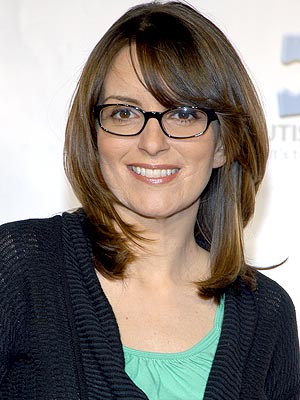
    Okay, I am like the 50 millionth person telling you this, Tina.  But, come on!  Sarah Palin is comedy gold!

    Photos: Sarah Palin on left, Tina Fey on right.

  • 阿牛為何要告急

    阿牛曾建成不是一個不好的參選人。

    他的問題是在選區的本身。

    互聯網是一股龐大的力量。毓民踩場平均有四萬人下載,四萬人在一個七百萬人的都市裡,是一個可觀的數目。

    問題是, 阿牛的選區人口老化。他的選民都是基層人士, 電腦是奢侈品, 枉論上網了。有錢的年輕人(爸爸媽媽住半山區)對選舉都很冷淡, 更加不用說投票了。拉票, 還須用上老式下選舉握手鞠躬一票一票拉回來。

    對, 也許阿牛只需要二萬五千票拿最後一席, 不過還是一票也不能少呀!